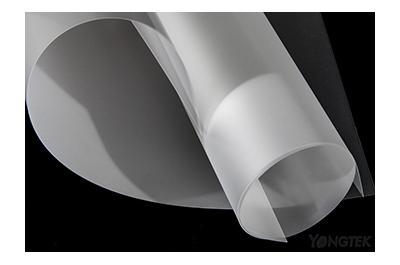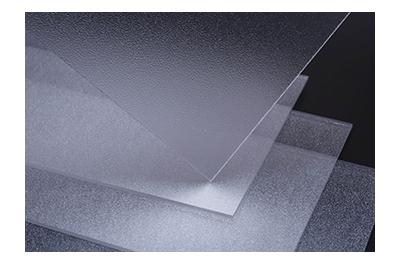

PE cleanroom bags are polyethylene packaging bags made with controlled raw materials, formulations, and manufacturing processes to reduce the risk of introducing particles, metal contamination, and organic outgassing. They are commonly used to package, store, and transport semiconductor components, electronics, optical products, precision parts, and machinery components.
For products that have just been cleaned or are about to enter a production process, packaging is an important part of contamination control. When selecting PE cleanroom bags, size and thickness are only part of the specification. The manufacturing environment, finished-product testing, and suitability for the intended application also need to be checked.
In This Guide
- PE Cleanroom Bags vs. Standard PE Bags
- Raw Materials and Manufacturing Processes
- Understanding Cleanroom Classifications
- Controlling Particles, Metals, and Outgassing
- Cleanliness Testing Methods
- Specifications and Acceptance Criteria
- YONGTEK Quality Control and Batch Traceability
- Supplying Electronics and Technology Customers in Taiwan and Overseas
- Frequently Asked Questions
PE Cleanroom Bags vs. Standard PE Bags
Both types use polyethylene as their main material. PE cleanroom bags, however, require tighter controls over raw materials, additives, the production environment, and finished-product inspection to meet clean packaging requirements.
Standard PE bags are generally selected for protection and processing performance. Cleanroom packaging also takes into account the contamination that the packaging itself may introduce, with testing and acceptance criteria defined for the intended use.
| Comparison | Standard PE Bags | PE Cleanroom Bags |
|---|---|---|
| Main Purpose | General packaging and product protection | Packaging for products sensitive to contamination |
| Materials and Formulation | Selected for general use; may contain processing additives | Raw materials and additives controlled according to cleanliness requirements |
| Production Environment | Typically manufactured in a general production environment, without necessarily using cleanroom controls | Manufactured and processed in a controlled clean environment |
| Quality Checks | Dimensions, thickness, appearance, and mechanical properties | Basic specifications plus particle, metal contamination, and outgassing tests as required |
| Acceptance Criteria | General packaging specifications | Specifications, test methods, and acceptance limits agreed with the customer |
On mobile devices, swipe horizontally to view the full table.
What to Check When Choosing a Supplier
“Cleanroom” does not mean completely free of contaminants. Actual cleanliness needs to be verified through finished-product testing. A supplier’s ability to carry out batch inspections and provide test data is therefore an important part of evaluating cleanroom packaging materials.
For PE cleanroom bags or other clean packaging requirements, contact YONGTEK to discuss your application.
Raw Materials and Manufacturing Processes
Consistent cleanliness starts with suitable raw materials and a controlled production environment. Finished-product testing then confirms whether the bags meet the specified requirements.
01. Raw Material and Additive Control
Raw materials and additives are potential sources of packaging contamination. YONGTEK uses PE resins suitable for clean packaging and does not add anti-blocking agents, reducing the contamination risks associated with these additives.
02. Manufacturing in a Controlled Clean Environment
Blown film extrusion, cutting, and subsequent handling can all affect packaging cleanliness. Carrying out these processes in a controlled clean environment helps reduce contamination from airborne particles and production activities.
YONGTEK’s PE cleanroom bags are produced using automated blown film extrusion and cutting equipment in a cleanroom that meets ISO Class 6 (Class 1,000) cleanliness requirements. Particle deposition and other contamination risks are controlled throughout production, while production data and inspection records are retained for quality management and batch traceability.
03. Finished-Product Testing and Batch Quality Control
Controlling the manufacturing environment is only one part of the process. Finished bags must also be checked against the agreed specifications. Tests for particles, metallic elements, and organic outgassing provide a basis for sample qualification, production acceptance, and ongoing batch quality control.
Further Reading: YONGTEK PE Cleanroom Bags: Manufacturing Environment, Testing, and Applications
Understanding Cleanroom Classifications
Cleanrooms are commonly classified under ISO 14644-1 according to the concentration of airborne particles. A lower ISO class number means a lower permitted particle concentration at a specified particle size.
The table below compares common ISO cleanroom classes with their approximate legacy designations. The figures show the maximum permitted number of airborne particles measuring 0.5 μm or larger per cubic meter of air.
| ISO Cleanroom Class | Legacy Designation (Approximate Equivalent) | Maximum Particle Concentration at ≥0.5 μm (Particles/m³) |
|---|---|---|
| ISO Class 5 | Class 100 | 3,520 |
| ISO Class 6 | Class 1,000 | 35,200 |
| ISO Class 7 | Class 10,000 | 352,000 |
| ISO Class 8 | Class 100,000 | 3,520,000 |
Based on the ≥0.5 μm particle concentration limits in ISO 14644-1:2015. On mobile devices, swipe horizontally to view the full table.
Cleanroom air cleanliness and finished-product cleanliness must be assessed separately.
These limits classify the air in a cleanroom. They are not particle acceptance limits for finished PE cleanroom bags, nor do they directly indicate particle counts inside a bag, metal content, or outgassing levels. Packaging cleanliness must be verified using the test methods, particle sizes, and acceptance limits agreed between the customer and supplier.
When evaluating PE cleanroom bags, review both the production environment and the finished-product test results. Acceptance criteria should reflect the product’s sensitivity to contamination, the process in which it will be used, and the customer’s specifications.
Controlling Particles, Metals, and Outgassing
The main contamination concerns for PE cleanroom bags are particles, metals, and organic outgassing. Contaminants may transfer to a product during contact with the packaging, storage, or transport. Testing requirements and acceptance limits should therefore be defined around the actual application.
Why Does Particle Control Matter?
A cleaned component can become contaminated again if particles are present on its packaging. For semiconductor components, optical elements, and precision parts, particles deposited on the surface may affect subsequent processing, appearance, or function.
Alongside the cleanliness of the manufacturing environment, the number and size of particles on the packaging itself are important control parameters.
Particle requirements vary between electronics manufacturing processes. Some customers specify monitoring at 0.5 μm, while more demanding applications may require monitoring down to 0.2 μm. YONGTEK works with customers to define the particle size ranges, particle counts, and acceptance limits, then arrange the corresponding production controls and inspections.
Why Does Metal Contamination Matter?
Trace metals in packaging may come from raw materials, additives, or manufacturing processes and can contaminate products through contact. In semiconductor and precision electronics applications, metal contamination may affect electrical performance and component reliability.
The metallic elements to be controlled and their acceptance limits should be specified according to process requirements, then verified using methods such as ICP-MS.
Why Check Organic Outgassing?
Packaging can look clean and still release organic compounds. Depending on temperature, storage time, and enclosed conditions, these substances may migrate to the product surface and leave contamination that is not visible to the naked eye.
Cleanliness Testing Methods for PE Cleanroom Bags
YONGTEK helps customers define testing requirements based on their applications and cleanliness specifications. The following methods are used to evaluate packaging quality.
| Test Parameter | Common Test Method | What It Measures |
|---|---|---|
| Particle Contamination | LPC Liquid Particle Counting |
Particle count and size distribution in liquid collected using a specified extraction or rinsing procedure |
| Metal Contamination | ICP-MS Inductively Coupled Plasma Mass Spectrometry |
Metallic element content under specified sample preparation conditions |
| Organic Outgassing | GC-MS Gas Chromatography–Mass Spectrometry with an appropriate sampling method |
Organic compounds released under specified test conditions |
On mobile devices, swipe horizontally to view the full table.
YONGTEK performs routine batch inspections for the agreed test parameters to verify that PE cleanroom bags meet customer specifications. Inspection records are retained for batch traceability. Third-party testing can also be arranged according to customer requirements.
If you have specific cleanliness standards or testing requirements, contact YONGTEK to discuss suitable product specifications and an inspection plan.
Specifications and Acceptance Criteria to Confirm Before Ordering
Bag style, dimensions, and thickness need to suit the product. Just as important are whether the packaging meets the required cleanliness levels and whether the supplier has the process controls and testing capabilities to verify them. The following checklist can help when evaluating a PE cleanroom bag supplier.
| Evaluation Area | Information to Provide or Confirm |
|---|---|
| Product to Be Packaged | Electronic components, optical materials, precision mechanical parts, or other products |
| Intended Use | Packaging after cleaning, temporary storage between processes, warehousing, or transport |
| Bag Specifications | Bag style, width, length, thickness, and dimensional tolerances |
| Cleanliness Requirements | Particle sizes and counts, specified metallic elements, and organic outgassing requirements |
| Acceptance Procedure | Test methods, acceptance limits, sampling procedures, and inspection frequency |
| Required Documentation | Sample test reports, batch inspection data, or third-party test reports |
On mobile devices, swipe horizontally to view the full table.
If you already have an internal packaging specification or an established test method, share it with YONGTEK for review. This helps keep sample qualification and subsequent production evaluations consistent.
Product Specifications: View Sizes, Thicknesses, and Custom Options for PE Cleanroom Bags and Films
YONGTEK Quality Control and Batch Traceability
Contamination sensitivity and acceptance limits differ across industries and manufacturing processes. Before accepting an order, YONGTEK confirms the bag specifications, contamination parameters, and acceptance criteria with the customer. Production and quality control are then carried out against those agreed requirements.
During production, batch inspections follow the agreed test parameters and frequency. Production data and inspection records are retained for traceability. Specific test methods or third-party verification can be discussed in advance so that sample evaluation, production inspection, and incoming acceptance use consistent criteria.
Supplying Electronics and Technology Customers in Taiwan and Overseas
YONGTEK has supplied PE cleanroom bags and PE cleanroom films to electronics and technology customers in Taiwan and overseas. We support product evaluation and supply requirements based on each customer’s packaging application, dimensions, and cleanliness specifications.
PE Cleanroom Bags: Frequently Asked Questions
Q1. Are PE cleanroom bags completely free of particles?
No. Cleanroom bags are designed to keep particle contamination within limits suitable for the customer’s application, rather than eliminate every particle. The particle sizes to be monitored and the acceptance limits must be agreed between the customer and supplier. When choosing a supplier, check that its production environment, process controls, and inspection capabilities can meet your cleanliness requirements.
Q2. Does production in an ISO Class 6 cleanroom guarantee suitability for semiconductor applications?
Not necessarily. Packaging cleanliness requirements vary between semiconductor processes, and the cleanroom classification is only one factor in assessing the manufacturing environment. Finished-product acceptance limits for particles, metal contamination, and organic outgassing still need to be confirmed with the manufacturer. These limits should reflect the intended process and provide the basis for production and inspection.
Q3. Can PE cleanroom bags be used as antistatic bags?
YONGTEK’s PE cleanroom bags are intended primarily for clean packaging, and the current formulations generally do not provide antistatic properties. If your application requires both cleanliness and static control, discuss your requirements with us so we can evaluate suitable packaging options.
Q4. What information should I provide when requesting PE cleanroom bags?
Please provide the product to be packaged, bag style, dimensions, thickness, estimated quantity, and a brief description of the application. If you have cleanliness specifications, required test methods, or acceptance limits, include those as well. This helps us assess the specifications and arrange appropriate sample testing.
Discuss Your Cleanroom Packaging Requirements with YONGTEK
Whether you need packaging after cleaning, temporary storage between processes, or protection for precision parts during storage and transport, send us your bag specifications and cleanliness requirements. Our team can help you assess the options for your application.