
With the rise of smart cities and the global push toward energy efficiency, electronic paper displays (EPD) are becoming increasingly common in everyday applications. These include retail electronic shelf labels, digital signage, hospital check-in systems, public information displays, smart signboards, transportation signage, and even restaurant menus.
Why Are Electronic Paper Displays So Energy Efficient?Unlike LCD displays, which rely on continuous LED backlighting to produce images, electronic paper does not emit light on its own. Instead, it reflects ambient light—much like real paper—allowing users to view content comfortably.
This reflective display technology not only significantly reduces power consumption but also provides a more eye-friendly viewing experience compared to traditional LCD screens.
Another key advantage is that EPDs retain their displayed image even when power is turned off. This “bistable” characteristic makes them extremely energy-efficient and ideal for applications with static or infrequently updated content.
Are There Any Drawbacks?
Despite their advantages in energy efficiency and visual comfort, electronic paper displays do have limitations. The main challenges include:
1. Slower refresh rates
2. Reduced visibility in low-light or nighttime conditions
3. Sensitivity to temperature variations
How Can These Limitations Be Addressed?
1. Refresh Rate Limitations:
The slower response time is inherent to EPD technology. As a result, these displays are best suited for applications where content does not need to change frequently.
2. Low-Light Visibility:
To improve readability in dark environments, a front light module can be integrated into the display.
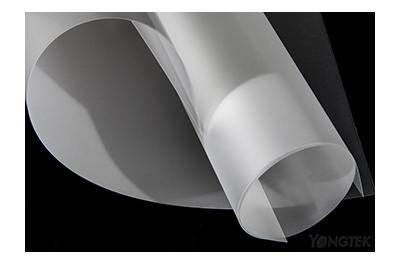
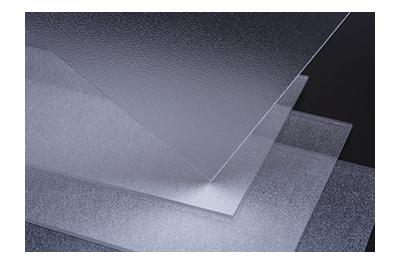
This involves placing a transparent optical film with microstructures over the EPD surface, combined with side-mounted LED light bars. Light enters the film from the edge and is evenly distributed across the surface through these microstructures, illuminating the display from the front.
This is why it is referred to as a front light system, and the optical film itself is commonly known as a front light guide plate.
3. Temperature Control:
Electronic paper displays typically operate reliably up to around 65°C. Beyond this range, performance and lifespan may be affected. For applications in semi-outdoor or outdoor environments, proper UV resistance and thermal management design are essential.
Why Use a Front Light Instead of a Backlight?
Electronic paper is a reflective display technology, unlike LCDs which are transmissive. If a light source were placed behind the display, it would be blocked and ineffective.
Therefore, illumination must come from the front, allowing light to reflect off the display surface and enhance visibility.
How Does a Front Light Module Work?
At the core of the front light module is the light guide plate. Its function is to convert light from edge-mounted LEDs into a uniform surface light source, evenly illuminating the EPD panel below.
What Is a Front Light Guide Plate?
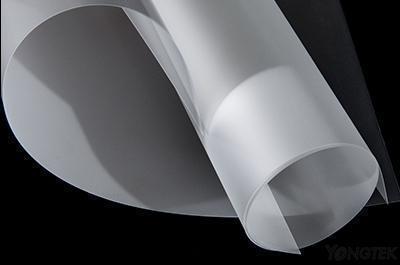
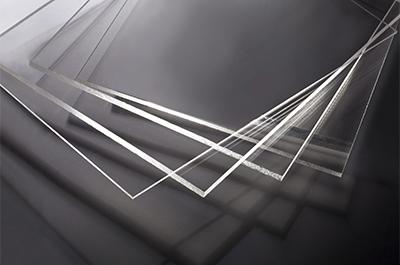
A front light guide plate is a transparent optical film—typically made from polycarbonate (PC)—with precisely engineered microstructures on its surface. Its primary function is light guiding and uniform light distribution.
Depending on industry terminology, it may also be referred to as a light guide film or light guide plate.
What Is the Core Technology Behind It?
The key lies in optical design.
Since display sizes vary across applications, achieving consistent brightness and uniform illumination requires precise optical engineering. The ability to tailor light distribution for different sizes and requirements is what differentiates a professional front light solution provider.
With extensive experience in optical design and mass production of front light systemsand light guide solutions for EPD and other applications, Yongtek offers reliable, high-performance solutions tailored to your needs.
Work Together With Yongtek for Your Smart Epaper Display Project!
If you are looking for a professional manufacturer of front light guide plates, light guide films, or optical components, feel free to contact us.