
What Are Acrylic/PC Light Strips, Tubes, Rods, and Profiles?
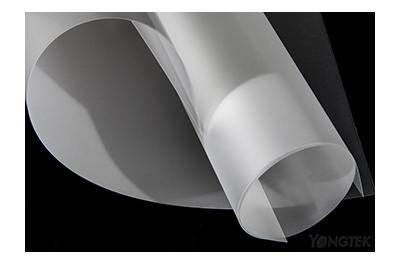
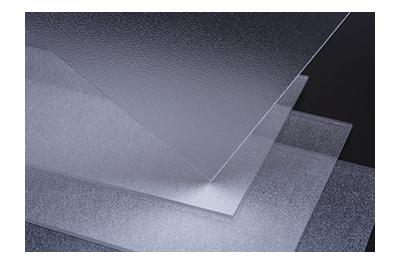
Acrylic (PMMA) and Polycarbonate (PC) optical components (including light strips, tubes, rods, and profiles) are components specifically designed for LED linear lighting and optical light guides. Their working principle is based on utilizing high-quality, optical-grade plastics—available in transparent, frosted, or with added light diffusing agents—to convert point light sources from LEDs into uniform linear or surface light sources, or to serve as mechanical parts that protect and enhance the light source.
When flexible LED strips or rigid LED boards are installed inside these tubes or profiles, light undergoes refraction, reflection, or diffusion through the internal structure of the plastic. This effectively eliminates harsh LED "hot spots" (or dotting effects), yielding a soft and uniform illumination effect.
These optical extruded and injection-molded products are widely used across major industries and lifestyle scenarios, including:
• Automotive lighting and Daytime Running Lights (DRL)
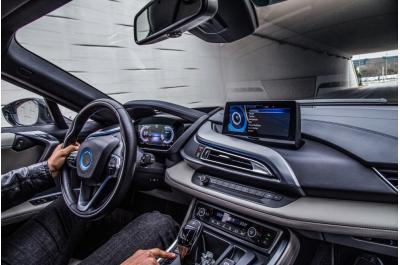
• Automotive ambient interior lighting
• Indoor lighting (such as T5 and T8 LED tubes and covers)
• Gaming machines and arcade visual lighting effects
• Commercial display racks and exhibition lighting
• Architectural outdoor linear lighting
• Medical instruments and industrial equipment indicator lights
What Are the Common Sizes and Specifications of Acrylic and PC Products?
The sizes and specifications of these products vary greatly depending on their application. For common lighting and light guide applications, typical specifications include:
1. Acrylic and PC Tubes / Rods
• Outer Diameter (OD) range: Can be produced from miniature 2 mm to large-scale 200 mm or more.
• Wall thickness: Common range is 1 mm to 5 mm, adjusted based on mechanical strength and optical requirements.
2. Light Strip Enclosures and Profiles
• Length can typically be continuously extruded and cut according to customer requirements, with standard lengths mostly ranging from 1000 mm to 3000 mm.
• Profiles (custom cross-sections) dimensions are completely 1:1 custom-tailored by opening molds based on the customer's lighting fixture mechanics.
These products of various sizes and shapes are typically used for:
• Automotive & Transportation: DRL light guide rods, automotive ambient light strips.
• Industrial & Commercial: Gaming machine decorative light strips, T5/T8 energy-saving tube enclosures.
• Special Customization: Transparent tubes for medical use.
What Are the Main Manufacturing Processes for Acrylic and PC Light Strips/Tubes/Rods?
There are three common manufacturing processes for these plastic optical products, each with its own advantages and limitations:
1. Continuous Extrusion
This is the most common method for producing tubes, rods, and profiles (custom geometric cross-sections). Plastic raw material is heated and melted, continuously extruded through a die into a specific shape, and then cooled, set, and cut.
• Advantages: Extremely high production efficiency, theoretically unlimited length, suitable for high-volume mass production, and lower unit cost.
• Limitations: Can only produce products with a uniform cross-section; cannot produce complex 3D structures.
• Typical applications: T5/T8 lamp tubes, linear light strip enclosures, solid acrylic rods.
2. Dual-Color / Multi-Color Co-Extrusion
This is an advanced extrusion technology that combines two or more plastics with different properties (e.g., transparent PC + milky-white diffusing PC) within the same mold to create a single integrated part.
• Advantages: Satisfies both "light transmission" and "shading/reflection" requirements simultaneously, simplifying the assembly process.
• Limitations: Complex mold design, high technical threshold, and higher initial setup/tuning costs.
• Typical applications: Automotive dual-color ambient light strips, professional lamp covers requiring backlight shading.
3. Injection Molding
Molten plastic is injected into a closed mold to cool and set. It is suitable for manufacturing optical parts with complex 3D structures, snap-fits, or varying wall thicknesses.
• Advantages: Extremely high precision, capable of presenting complex details and curved surfaces, with minimal geometric constraints.
• Limitations: High mold development costs, not suitable for producing ultra-long linear products.
• Typical applications: 3D tactile buttons and illuminated panels for gaming machines, complex internal light guide blocks for automotive lamps.
How Do You Choose the Right Manufacturing Process?
Different applications require different manufacturing processes. In general, if your product requires an extremely long linear structure or a fixed geometric cross-section (such as T8 tubes or long ambient light strips), continuous extrusion or co-extrusion is the best choice because it provides the highest economic efficiency and length flexibility.
However, if your product features the following:
• Complex 3D geometric shapes
• Mechanical parts with snap-fits or mounting points
• Smaller dimensions but extremely high precision requirements
Then injection molding is usually the better solution. Although its mold cost is higher, it can satisfy the complex geometries and assembly needs that the extrusion process cannot, making it ideal for automotive lamp modules and precision gaming machine components.
How to Choose a Reliable Acrylic and PC Product Manufacturer?
When selecting a manufacturer for these types of products, you should strictly evaluate several key indicators:
1. Material and Optical Formulation Capability A strong manufacturer must have the expertise to formulate "light diffusing agents." This determines whether the light strip can perfectly hide LED hot spots (no visual dark zones) while maintaining high light output efficiency.
2. Mold Design and Precision Extrusion Technology Especially when producing custom "profiles," the mold design determines the product's dimensional tolerances and surface finish. An experienced manufacturer ensures that no deformation or shrinkage occurs during mass production.
3. Material Diversity and Weathering Treatment High-quality manufacturers should offer UV-resistant grade PC materials, or heat-resistant and flame-retardant plastics to prevent yellowing or embrittlement in automotive or high-temperature outdoor environments.
4. Dual-Color / Multi-Color Co-Extrusion Capability If you need composite material components for automotive or high-end lighting applications, inquire whether the manufacturer possesses "co-extrusion" technical capabilities. This is often the benchmark that distinguishes average processing plants from top-tier optical manufacturers.
How to Improve the Optical Performance of These Products?
Whether it is an acrylic tube or a PC profile, its lighting performance depends not only on the internal flexible LED strips but also on the quality of the plastic itself:
• Adding Light Diffusing Agents: Scatters point light sources to achieve uniform illumination and avoid glare.
• UV (Ultraviolet) Stabilizers: Extend service life under sunlight or high-energy LED blue light exposure, preventing premature yellowing.
• Internal Fluting / Micro-structures: Pulling micro-grooves or serrations on the internal wall via the mold effectively increases refraction, enhancing light guide efficiency and visual texture.
How to Fix Light Non-Uniformity or Yellowing Issues?
If you find noticeable "hot spots" or that the plastic turns yellow after a period of use upon lighting up the fixture, the issue usually stems from the following factors:
• Insufficient Diffusion Rate: No diffusing agent was added to the raw material, or the added proportion was inappropriate.
• Incorrect Material Selection: Ordinary acrylic or PC material without UV stabilizers was mistakenly used in outdoor or high-temperature automotive environments.
• Incorrect Distance between LEDs and the Cover (D/S ratio): The LED chips are too close to the diffusion surface. Professional manufacturers can recommend the most suitable profile thickness and cross-section design based on your LED configuration.
FAQ – Frequently Asked Questions
Q1: Do light guide and lighting components always need to be made from acrylic (PMMA)? What is the difference compared to PC? Acrylic has excellent light transmittance (up to 92%) and superior UV resistance, making it suitable for indoor light guide rods pursuing ultimate brightness. PC (polycarbonate), on the other hand, is known for its excellent impact resistance (unbreakable) and high heat resistance, and can reach flame-retardant grades. Therefore, PC is preferred for automotive lamps, outdoor lighting, and gaming machines.
Q2: Will your PC lamp covers or tubes turn yellow easily? We use high-quality, optical-grade raw materials and can add high-efficiency UV stabilizers to the formulation based on customer needs. This significantly improves the product's tolerance against ultraviolet rays and high-energy LED blue light, delaying the onset of yellowing.
Q3: What tube and rod options do you offer? We offer a wide range of acrylic and PC clear tubes, frosted tubes, diffusing tubes, and solid light guide rods. We have complete outer diameter sizes and can provide precise secondary processing services such as cutting and polishing.
Q4: I want to make a special-shaped light strip enclosure; do custom profiles require mold fees? Yes. Because the cross-section of the profile is custom-tailored specifically for your product's mechanism, a dedicated extrusion mold needs to be developed.
Q5: Which is better: continuous extrusion or injection molding? This depends entirely on the product's shape. Continuous extrusion is ideal for producing long products with a uniform cross-section, such as tubes, rods, and light strip enclosures. Injection molding is suited for manufacturing precision components with complex shapes, 3D surfaces, or snap-fits.
Q6: Can you produce flexible light strips or flexible plastic profiles? Yes. In addition to rigid PC and acrylic, we can also use specific formulations or soft plastics (such as TPU or soft PVC) to produce flexible light strip enclosures that meet curved installation requirements.
Q7: What process is typically used to produce automotive ambient light strips? To achieve the requirement of light emission on one side and shading or mounting fixtures on the other, automotive ambient light strips typically use the "dual-color co-extrusion" process. Integrating the transparent light-guiding part and the opaque base part yields the most ideal effect.
Q8: What is the maximum production length of the products? Are there shipping constraints? Theoretically, the length of extruded products is unlimited, but practically it is restricted by factory space and container/truck hauling lengths. Generally, we recommend controlling the length of a single piece to within 3 meters for ease of packaging and shipping.
Q9: Can PC material achieve flame-retardant ratings? Yes. We can select PC raw materials that meet UL94 V-0 or V-2 flame-retardant ratings for production, which is highly suitable for public lighting, gaming machines, or automotive components with strict safety requirements.
Q10: Can acrylic or PC tubes undergo post-processing (such as drilling and tapping)? Yes. PC has excellent toughness and is highly suitable for drilling, cutting, and tapping without breaking easily. Although acrylic is more brittle, it can also undergo precise subsequent mechanical processing using the correct tools and processing RPMs.
Q11: Can I purchase the complete optical module including LED light strips from you? We specialize in the extrusion and injection molding of plastic optical profiles, tubes, and rods. If you need a complete module including flexible LED strips, we are very happy to coordinate with your electronics contract manufacturer, or we can introduce you to our long-term, high-quality LED strip partners.
Contact Us for Professional Plastic Optical Solutions
We hope this guide helps you better understand the applications and advantages of acrylic and PC light guide and lighting accessories! If you have any custom project needs for automotive light guide rods, ambient light strips, gaming machine illuminated components, or custom profile molds, feel free to contact our experienced team.
Contact Info: sales@yongtek.com